

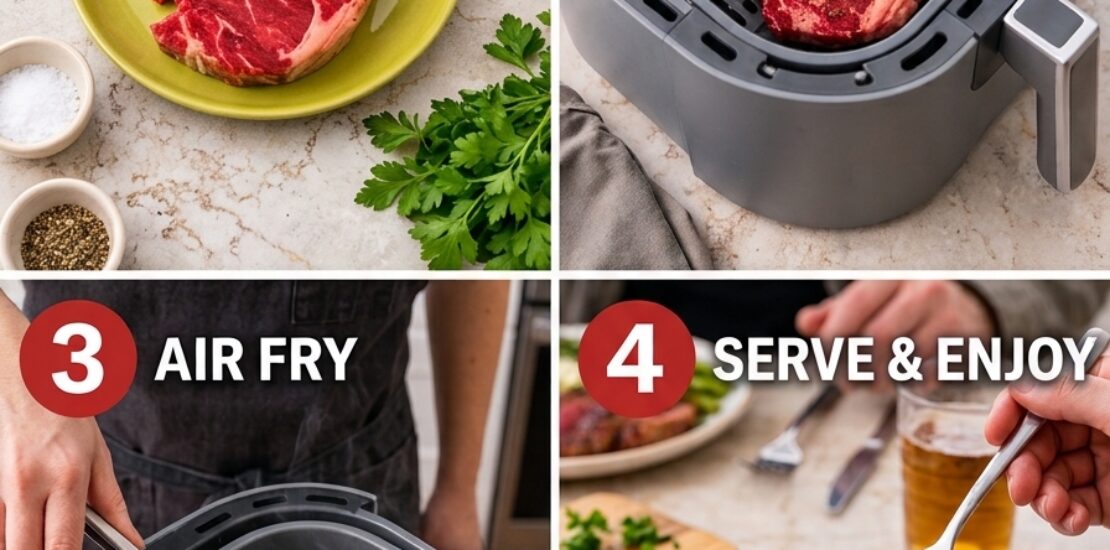
Discover how an air fryer ribeye steak can turn an ordinary dinner into something special. Ribeye is naturally rich, flavorful and beautifully marbled, making it an excellent choice for a satisfying homemade meal.
There is something special about a perfectly prepared ribeye steak. Its rich beefy flavor, tender texture and beautiful marbling make it a popular choice for anyone who enjoys a satisfying dinner. Traditionally, ribeye is associated with restaurant grills, cast-iron pans and outdoor barbecues, but modern home cooks have discovered another convenient option: the air fryer.
An air fryer ribeye steak brings together the familiar appeal of a steakhouse meal and the convenience of countertop cooking. You don’t need a large barbecue or an elaborate collection of kitchen equipment to enjoy a delicious steak-inspired dinner.
Ribeye comes from the rib section of the cow and is appreciated for its natural fat distribution. The cut has a long history in American steakhouse cooking, although beef rib cuts are enjoyed in many culinary traditions around the world. Its generous marbling helps create a rich flavor that works beautifully with simple seasoning.
One of the most useful lessons when choosing ribeye is that the quality of the meat matters just as much as the seasoning. Look for a fresh steak with fine, evenly distributed white marbling throughout the meat. A reputable butcher or trusted supermarket supplier is a good place to start. USDA Choice or Prime labels can be useful references when shopping in the United States. If those labels aren’t available, ask for a well-marbled ribeye with a consistent thickness.
Butter, garlic and fresh herbs are classic flavor companions. Unsalted butter gives you more control over the seasoning, while fresh garlic adds a pleasant aromatic quality. If you prefer a dairy-free alternative, a little olive oil can replace butter without sacrificing flavor.
Another important detail is avoiding excessive seasoning and overcrowding. Ribeye already has plenty of natural flavor, so it doesn’t need a complicated mixture of spices. Consistent steak thickness also helps create more predictable results.
This recipe can be part of a balanced meal when paired with vegetables and a fresh salad. It is naturally gluten-free when the seasonings and accompanying sauces are checked for gluten-containing ingredients.
Why Ribeye Is a Favorite
Ribeye has earned its reputation because it offers a combination of tenderness, juiciness and flavor that many other beef cuts struggle to match. Its fat is distributed throughout the muscle rather than appearing only around the outside. This marbling gives the meat its distinctive appearance and contributes to its rich taste.
Unlike leaner cuts, ribeye doesn’t rely entirely on sauces or marinades to make it enjoyable. Even a straightforward combination of salt, black pepper and garlic can complement its natural characteristics.
Another reason home cooks appreciate ribeye is its versatility. It can be part of an elegant weekend dinner, a family celebration or a simple meal when you want something a little different.
Why Choose an Air Fryer?
Air fryers circulate hot air around food, creating a cooking environment that can be useful for preparing individual portions of meat. Their compact design makes them convenient for smaller kitchens, apartments and households that don’t always need to heat a full-sized oven.
For steak lovers, the appeal is straightforward: less equipment, a relatively simple cooking setup and an easier cleanup routine.
The air fryer also makes it convenient to prepare side dishes separately. Crispy potatoes, roasted vegetables and other familiar favorites can complement the steak without requiring an elaborate dinner arrangement.
Results depend on the air fryer model, the thickness of the meat and the amount of space around the steak. A little attention to these details makes a noticeable difference.
Ingredients
The beauty of this air fryer ribeye steak recipe is that it doesn’t require a long shopping list. A few good-quality ingredients are enough to complement the beef.
- 2 ribeye steaks (approximately 8–10 oz or 225–285 g each): Choose boneless steaks with good marbling and reasonably even thickness.
- 1 tablespoon (15 ml) olive oil: Helps the seasonings adhere to the surface.
- 1 teaspoon (5 g) kosher salt: Enhances the natural beef flavor.
- ½ teaspoon (1 g) freshly ground black pepper: Adds gentle warmth and a little bite.
- 1 teaspoon (3 g) garlic powder: Provides savory garlic flavor without adding moisture.
- ½ teaspoon (1 g) smoked paprika: Adds a subtle smoky note and attractive color.
- 1 tablespoon (14 g) unsalted butter: Brings richness and a smooth finish.
- 1 garlic clove (approximately 3 g), finely minced: Adds a fresh aromatic touch.
- 1 teaspoon (1 g) fresh rosemary: Gives the dish a fragrant, earthy character.
- 1 teaspoon (1 g) fresh thyme: Complements the beef without overpowering it.
- 1 teaspoon (5 ml) fresh lemon juice: Optional, for a little brightness.
Choosing the Best Ribeye Steak
The most important ingredient is, naturally, the ribeye itself.
When shopping, look for meat with visible white marbling. These small streaks of fat are a desirable characteristic because they contribute to the steak’s flavor and texture.
A steak with an even thickness is also preferable. When the thickness varies considerably, different parts may cook at different rates.
Boneless ribeye is convenient for individual portions, while bone-in ribeye is often chosen for its traditional steakhouse presentation.
Seasonings and Flavor Enhancers
Salt and black pepper form the foundation of this recipe. They enhance the beef rather than competing with it.
Garlic powder is especially useful because it distributes evenly and gives the steak a familiar savory flavor. Smoked paprika introduces a gentle smoky character that complements the richness of the meat.
Fresh rosemary and thyme provide a more aromatic finish. They are particularly appealing when combined with butter and garlic.
You can also experiment with onion powder, dried oregano or a small amount of chili powder if you enjoy additional seasoning.
What to Serve With
Ribeye is rich and satisfying, so the best side dishes provide contrast. Crispy potatoes add texture, vegetables bring freshness and a bright salad helps balance the richness of the beef.
Here are seven delicious pairing ideas.
1. Crispy Air Fryer Potatoes
Golden potatoes are one of the most familiar companions for steak. Their crispy exterior and soft interior provide a pleasant contrast to tender beef.
Baby potatoes, potato wedges and seasoned potato cubes are all excellent choices. Garlic, rosemary and a little paprika create a flavorful combination.
2. Garlic Butter Green Beans
Green beans bring color and freshness to the plate. Their slightly crisp texture works particularly well alongside the rich character of ribeye.
A little garlic, butter and black pepper are enough to make them delicious without overwhelming their natural flavor.
3. Fresh Garden Salad
A refreshing salad provides a lighter contrast to steak. Combine lettuce, cucumber, cherry tomatoes and red onion for a colorful side dish.
A simple lemon vinaigrette adds acidity, helping balance the richness of the beef.
4. Creamy Mashed Potatoes
Mashed potatoes are a classic steakhouse pairing. Their smooth texture complements the steak beautifully, especially when served with garlic butter or a light gravy.
For extra flavor, consider adding roasted garlic, a little milk and freshly ground pepper.
5. Roasted Broccoli
Broccoli adds a fresh, slightly earthy flavor to the meal. Its texture contrasts nicely with the tenderness of ribeye.
A little lemon juice and olive oil make a simple finishing combination.
6. Creamy Mushroom Sauce
Mushrooms and beef are a natural flavor combination. Their earthy taste complements the marbling in ribeye, making mushroom sauce a popular accompaniment.
A homemade sauce with mushrooms, garlic, herbs and cream creates a restaurant-inspired presentation.
7. Homemade Lemon Iced Tea
A refreshing drink can complete the meal. Homemade lemon iced tea offers a light citrus flavor that contrasts with the richness of the steak.
Sparkling water with lemon and fresh mint is another lovely non-alcoholic option.
Understanding Ribeye Steak
Before choosing your ingredients, it helps to understand what makes ribeye different from other beef cuts. This knowledge can make shopping easier and help you select a steak that suits your preferences.
Bone-In vs. Boneless Ribeye
Ribeye is commonly available in two varieties: bone-in and boneless. Both come from the rib section, but they offer slightly different presentations.
Boneless ribeye is particularly convenient for everyday cooking. It is easier to portion, fits more readily into different air fryer baskets and provides a consistent amount of meat in each serving.
Bone-in ribeye has a more traditional steakhouse appearance. The bone adds visual appeal, although it also affects the overall dimensions of the steak. This matters when selecting meat for a compact air fryer.
| Feature | Boneless Ribeye | Bone-In Ribeye |
|---|---|---|
| Convenience | Easy to portion | Larger and bulkier |
| Presentation | Simple and elegant | Traditional steakhouse appearance |
| Air fryer fit | Usually easier | Depends on the basket |
| Flavor | Rich and beefy | Rich and beefy |
| Best for | Everyday meals | Special occasions |
Neither option is automatically better. Your choice depends on portion size, availability and the space in your appliance.
Understanding Marbling
Marbling refers to the thin streaks of fat distributed throughout a piece of meat. It is one of the most recognizable characteristics of a quality ribeye.
These small streaks contribute to the steak’s characteristic richness. As the meat cooks, its fat distribution influences the overall eating experience.
When shopping, look for fine, relatively even marbling rather than relying exclusively on the thickness of the outer fat layer.
A beautifully marbled steak often needs very little additional flavoring. That’s why simple seasoning is such a good match for ribeye.
Tips for Better Air Fryer Steak
A good steak starts with good ingredients, but a few practical considerations can make the experience more consistent.
The air fryer is convenient, but it isn’t identical to a traditional grill or skillet. Understanding how its cooking environment works helps you make better choices.
Thickness and Consistency
Steak thickness is an important consideration when choosing ribeye for an air fryer.
Two steaks weighing the same amount can have completely different dimensions. One may be relatively thin and wide, while another may be smaller but much thicker.
This difference influences how heat reaches the center of the meat. For a more predictable result, choose steaks with reasonably consistent thickness.
Avoid overcrowding the air fryer basket. Hot air needs room to circulate around the food, and placing several pieces too close together can interfere with even cooking.
The size of the steak should also suit your appliance. A smaller basket may be better suited to one individual portion at a time.
Temperature and Doneness
Steak doneness is a popular subject among home cooks. Some people prefer a firmer texture, while others enjoy a more tender result.
However, food safety should always come first.
According to the USDA, whole cuts of beef steaks should reach a minimum internal temperature of 145°F (63°C), followed by a resting period of at least three minutes. A food thermometer is the most reliable way to check the temperature. Ask USDA+1
Here is a useful reference table:
| Doneness preference | General description |
|---|---|
| Rare | Very red center and soft texture |
| Medium-rare | Warm red center |
| Medium | Pink center with a firmer texture |
| Medium-well | Mostly cooked through |
| Well-done | Fully cooked throughout |
These descriptions explain common culinary preferences rather than replacing food-safety guidance. Use the recommended safe temperature when preparing beef at home.
A digital food thermometer is a particularly useful kitchen accessory because the outside appearance of steak cannot reliably tell you its internal temperature.
Common Mistakes to Avoid
Even a simple recipe can produce disappointing results when a few important details are overlooked.
One common mistake is choosing a steak with very uneven thickness. The thinner sections may cook differently from the thicker center, making the finished texture less consistent.
Another issue is overcrowding. An air fryer works by circulating hot air, so placing too much food in the basket can interfere with the appliance’s performance.
Excessive seasoning can also hide the natural character of ribeye. This cut already has a rich flavor, so there is rarely a need for a complicated spice mixture.
Pay attention to the quality of your ingredients, too. Old dried herbs, stale spices and low-quality butter can make a noticeable difference in the final flavor.
Finally, don’t overlook resting time. Allowing cooked steak to rest for the recommended food-safety period is important before serving.
A few additional considerations can help improve your results:
- Avoid excessive oil: Ribeye already contains natural fat, so a generous amount of additional oil isn’t necessary.
- Choose fresh seasonings: Freshly ground black pepper and good-quality garlic powder add plenty of flavor.
- Consider appliance capacity: Different air fryer models have different basket dimensions and airflow characteristics.
- Use a thermometer: Appearance alone cannot establish whether steak has reached a safe internal temperature.
- Keep leftovers refrigerated: Prompt refrigeration is important for food safety.
Is Air Fryer Ribeye a Healthy Recipe?
Can ribeye fit into a balanced eating pattern? Yes, although portion size and the accompanying ingredients matter.
Beef provides protein and several important nutrients, including iron, zinc and vitamin B12. Ribeye also contains more fat than some leaner beef cuts because of its marbling.
The air fryer offers a convenient cooking method without requiring a large quantity of added cooking oil. However, air frying doesn’t automatically make every ingredient low in calories or fat.
A balanced plate can include a reasonable serving of steak alongside vegetables, a fresh salad and a suitable carbohydrate source.
For example, roasted broccoli, green beans and a modest serving of potatoes create a satisfying combination of different food groups.
Here are some simple ways to make the meal more balanced:
- Choose a portion size that suits your dietary needs.
- Pair the steak with colorful vegetables.
- Use olive oil sparingly when preparing side dishes.
- Avoid relying heavily on rich, creamy sauces.
- Include fresh herbs, lemon and other naturally flavorful ingredients.
- Consider leaner beef cuts when you want a lower-fat alternative.
If you’re following a gluten-free eating pattern, plain ribeye is naturally gluten-free. Check seasoning blends, prepared sauces and packaged marinades, as some products contain gluten-containing ingredients.
For anyone interested in a healthy recipe that still feels satisfying, the combination of a modest steak portion, vegetables and fresh salad is a practical approach.
Storage and Leftover Ideas
Ribeye can be enjoyed beyond the original meal, making it a useful ingredient for other dishes.
If you have leftovers, refrigerate them promptly in a clean, covered container. The USDA recommends refrigerating perishable food within two hours, or within one hour when the surrounding temperature is above 90°F (32°C). CDC
For best quality, refrigerate cooked steak for approximately three to four days.
When reheating, make sure leftovers reach 165°F (74°C). Avoid repeatedly reheating the same portion, as this can affect both quality and food safety.
Delicious Ways to Use Leftover Ribeye
1. Steak and Avocado Salad
Combine leftover steak with lettuce, avocado, cherry tomatoes and cucumber. A lemon dressing gives the salad a refreshing finish.
2. Steak Sandwich
Ribeye makes a flavorful sandwich filling. Pair it with fresh lettuce, tomatoes and a little mustard or your preferred sauce.
3. Steak and Potato Bowl
Combine small portions of steak with roasted potatoes, broccoli and a simple yogurt-based dressing.
4. Beef and Vegetable Wrap
Add leftover beef to a wrap with lettuce, tomatoes, cucumber and a flavorful sauce.
5. Steak and Rice Bowl
Serve small portions of steak with rice, sautéed vegetables and fresh herbs for an easy lunch.
These ideas help make the most of your ingredients without turning leftovers into another complicated cooking project.
Conclusion
Air fryer ribeye steak is a wonderful option when you want a flavorful, satisfying meal without complicated kitchen preparation. Its natural marbling, rich beefy taste and versatility make it a favorite for both everyday dinners and special occasions.
The secret to enjoying good ribeye starts with choosing quality meat. Look for attractive marbling, consistent thickness and fresh ingredients. Simple seasonings such as garlic, black pepper, rosemary and butter can complement the beef beautifully.
Don’t forget the side dishes, either. Crispy potatoes, fresh salads, roasted vegetables and homemade sauces can transform a simple steak dinner into something memorable.
Whether you’re preparing a weekend meal for your family or looking for a new addition to your air fryer recipe collection, ribeye is certainly worth considering.
Once you appreciate how convenient this cooking method can be, you might find yourself adding more steakhouse-inspired meals to your weekly menu!
Frequently Asked Questions
1. Can you cook ribeye steak in an air fryer?
Yes! An air fryer can cook ribeye steak using circulating hot air. It is a convenient alternative to traditional cooking methods, particularly when preparing individual portions. The final result depends on steak thickness, appliance capacity and temperature control. A food thermometer is essential for checking that the steak reaches a safe internal temperature.
2. Is ribeye a good steak for air frying?
Ribeye is an excellent option because its natural marbling contributes to its rich flavor. Unlike some leaner beef cuts, it doesn’t need an elaborate marinade to taste delicious. Simple ingredients such as salt, pepper, garlic and rosemary complement its natural characteristics.
3. Should I choose bone-in or boneless ribeye?
Both are suitable options. Boneless ribeye is generally more convenient because it is easier to portion and fits more easily into different air fryer baskets. Bone-in ribeye offers a traditional steakhouse presentation, but its larger dimensions may make it less convenient for smaller appliances.
4. What seasonings taste best with ribeye?
Garlic powder, freshly ground black pepper, kosher salt, smoked paprika, rosemary and thyme are excellent choices. These ingredients complement the natural flavor of beef without overwhelming it. Butter and fresh garlic also make a delicious finishing combination.
5. Is air fryer ribeye healthier than pan-fried steak?
Air frying can reduce the amount of additional cooking oil needed, but the nutritional value of the steak itself remains important. Ribeye naturally contains fat, protein and essential nutrients. Pairing a reasonable portion with vegetables and fresh salad can help create a balanced meal.


