
There are some recipes that feel almost too simple to be special. A few potatoes, some eggs, a little onion, olive oil, and salt hardly sound like the ingredients for something memorable, yet Spanish potato omelette, or tortilla de patatas, has been doing exactly that for generations. It is thick, golden, satisfying, and wonderfully adaptable. Traditionally, the potatoes and onion are gently cooked in olive oil before being folded into beaten eggs and slowly set into a round omelette. Spain’s official tourism site describes tortilla de patatas as one of the country’s best-known traditional dishes and notes that it was documented in Villanueva de la Serena, Badajoz, in 1798.
My favorite thing about making this version in an air fryer is that it takes away some of the fuss without taking away the character of the dish. You do not need to stand over a skillet worrying about whether the bottom is burning or whether the flip will turn into a kitchen disaster. The air fryer gives the potatoes a gentle roast, then cooks the egg mixture in a small ovenproof pan or cake tin until the edges are beautifully set and the center is tender. I like to think of it as giving a traditional Spanish recipe a little modern kitchen shortcut.
And yes, there is one important detail: the potatoes should be tender rather than aggressively crispy. Think soft golden coins, not French fries. Once you get that right, the eggs become the creamy glue that brings everything together. Depending on how you like your tortilla, you can serve it warm, at room temperature, or chilled. It is equally comfortable on a breakfast table, tucked into a lunchbox, served as a light dinner, or cut into small squares for a tapas-style spread. Spain’s official culinary guidance also highlights its versatility and classic pairings such as bread, salad, and other tapas.
A little Spanish tortilla history
The history of tortilla de patatas is surprisingly interesting for such a humble dish. Spain’s official tourism information says the potato omelette was first documented in 1798 in Villanueva de la Serena and connects its early history with the idea of creating an inexpensive, filling food. The recipe eventually became part of everyday Spanish cooking and is now strongly associated with tapas bars, home kitchens, family lunches, picnics, and casual gatherings. It is also one of those dishes that inspires friendly arguments, particularly about whether onion belongs in the tortilla. Spain’s tourism site openly acknowledges the great with-onion versus without-onion debate.
For this recipe, I am firmly on the onion side. Thinly sliced onion becomes sweet and mellow as it cooks, and those little soft pieces are fantastic against the earthy potatoes and rich eggs. That said, leaving the onion out will still give you a delicious tortilla, so do not let tradition become a reason not to cook it. The beauty of a home recipe is that you can make it yours.
Why make tortilla in an air fryer?
The air fryer is especially useful here because it can handle the two important stages separately: cooking the potatoes and setting the egg mixture. Current air-fryer recipes use temperatures ranging from about 320°F to 400°F, depending on the appliance and stage of cooking. Lower temperatures are particularly useful when setting the egg because they reduce the chance of getting a browned exterior with an undercooked middle.
For this recipe, I recommend a moderate temperature rather than chasing maximum crispness. The goal is a tortilla with a lightly golden exterior, tender potatoes, and eggs that are fully cooked but not dry and rubbery. Your exact cooking time will depend on the size and depth of your pan, the wattage of your air fryer, and how thick you make the tortilla. That is why the visual cues matter just as much as the clock.
Ingredients
For a 4-serving air fryer Spanish potato omelette, you will need:
| Ingredient | US Measurement | Metric |
|---|---|---|
| Yukon Gold or similar potatoes | 1¼ lb | 570 g |
| Yellow onion | 1 small | about 100 g |
| Large eggs | 6 | about 300 g |
| Extra-virgin olive oil | 2½ tbsp | 37 ml |
| Fine sea salt | 1 tsp | about 5 g |
| Black pepper | ¼ tsp | about 1 g |
| Fresh parsley | 1 tbsp, chopped | about 4 g |
The potato is the foundation, so choose something that becomes creamy when cooked. Yukon Gold potatoes are my first choice because they hold their shape while developing a soft, buttery texture. Yellow potatoes or other waxy-to-all-purpose varieties can also work beautifully. I would avoid very old, dry potatoes if possible because they can become crumbly instead of creamy.
The olive oil matters, too. You do not need to pour in the huge quantity traditionally associated with skillet-fried tortillas. The air fryer lets you use considerably less while still coating the potatoes and giving the finished omelette a lovely Mediterranean character. A good extra-virgin olive oil brings grassy, fruity notes that you can actually taste in such a short ingredient list.
The eggs should ideally be fresh and close to room temperature before mixing. Beat them well, but do not whip them into a huge foamy cloud. You want the mixture combined and slightly aerated, not transformed into a soufflé base. Salt the eggs separately and taste the seasoning of the potato mixture before everything goes into the pan.
Choosing potatoes and making realistic substitutions
If you have Yukon Gold, use them. If not, red potatoes are a very practical substitute because they stay intact during cooking. Russet potatoes can also be used, although they tend to be starchier and can break apart more easily after air frying. Slice them into thin, fairly even pieces so they cook at approximately the same speed.
For the onion, a yellow onion gives the classic sweet-savory flavor. White onion works well too, while a sweet onion produces a softer, sweeter tortilla. If you dislike onion, simply omit it. I would not replace it with a large amount of garlic because garlic can dominate the delicate potato-and-egg combination.
If you need a dairy-free recipe, there is nothing to change because the basic tortilla is naturally dairy-free. It is also gluten-free when prepared with naturally gluten-free ingredients and clean equipment. For a vegetarian meal, the traditional recipe already fits the bill. For a halal-friendly table, the basic recipe also requires no meat or alcohol.
One substitution I do not recommend is replacing the potatoes with frozen French fries. It sounds clever, but the texture is noticeably different. Fresh potatoes give you the soft, tender interior that makes tortilla de patatas special.
What to Serve With
Spanish tortilla is one of those dishes that can carry an entire meal, but simple accompaniments make it even better. Spain’s official tourism guidance specifically mentions bread and breadsticks as classic complements, while tortilla is also commonly served as a tapa or pincho de tortilla.
Pairing ideas for a complete meal
- Simple green salad: Lettuce, cucumber, tomato, olive oil, and a splash of sherry vinegar cut through the richness of the eggs and potatoes.
- Pan con tomate: Rub ripe tomato over toasted crusty bread, add olive oil and a pinch of salt, and serve it alongside the tortilla. The juicy tomato is a fantastic contrast.
- Garlic aioli: A small spoonful of creamy aioli adds richness and a gentle garlic kick. Keep the portion modest so it does not overpower the tortilla.
- Marinated olives: Green or black olives bring a salty, briny note that works naturally with the mild potato and egg.
- Roasted red peppers: Their sweetness adds color and a little smoky depth to the plate.
- Gazpacho: On a warm day, a chilled tomato-based gazpacho makes a refreshing companion to a thick slice of tortilla. Spain’s culinary tourism information describes gazpacho as a classic summer dish built around fresh vegetables, olive oil, and tomatoes.
- Crusty bread: Sometimes the simplest option wins. A piece of rustic bread is ideal for catching the last bit of olive oil and egg from the plate.
For a drink, try sparkling water with lemon, a chilled non-alcoholic citrus drink, or, for adults who drink alcohol, a light Spanish-style lager or a glass of dry white wine. If you are serving the tortilla for brunch, coffee also works surprisingly well. The slightly bitter drink balances the savory richness of the eggs and potatoes.
Step-by-Step Cooking Process
This recipe uses a 6- to 7-inch round oven-safe pan or cake tin that fits comfortably inside your air fryer. A smaller, deeper pan produces a thicker tortilla and generally needs a little more time. A wider pan creates a thinner omelette that cooks more quickly.
The key is to think in stages. First, cook the potatoes until tender. Second, combine them with the eggs. Third, gently set the tortilla. Finally, give it a short rest before slicing. That little pause is not wasted time; it allows the egg structure to settle so your beautiful round tortilla does not collapse when you cut it.
Step 1: Prepare and season the potatoes
Peel the potatoes if you prefer a smoother texture, although very clean thin-skinned potatoes can be left unpeeled for a more rustic tortilla. Slice them into thin rounds, roughly ⅛ to ¼ inch (3–6 mm) thick. Try to keep the slices reasonably consistent because thick pieces take longer to soften while very thin pieces can become crisp before the thicker pieces are ready.
Slice the onion into thin half-moons. Place the potatoes and onion in a bowl, add about 1½ tablespoons of olive oil, and toss thoroughly. Season lightly with salt. Do not dump all the salt in at this stage because you will season the eggs separately.
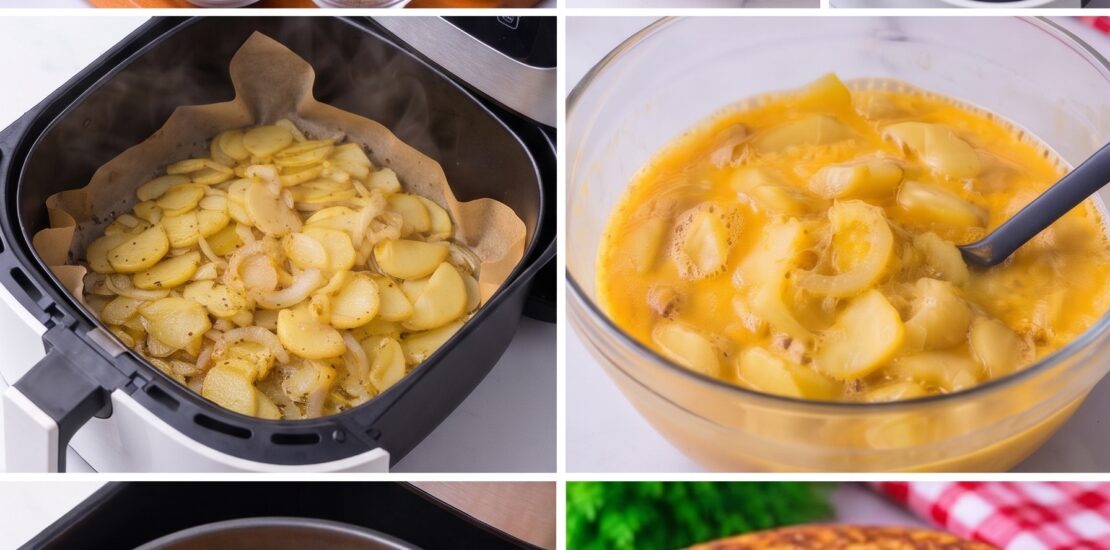
Preheat your air fryer to 375°F (190°C) for about 3 minutes. Spread the potatoes and onion in the basket as evenly as possible. Air fry for approximately 15–20 minutes, shaking the basket every 5–6 minutes. The potatoes should be tender when pierced with a fork and lightly golden around some edges.
This stage is where many people go wrong. You are not trying to make crunchy chips. If the potatoes become dark and crisp, the finished tortilla can have hard, dry pieces inside. Current air-fryer tortilla recipes similarly recommend cooking the potatoes separately before adding the egg mixture, with potato-cooking stages commonly falling around 15–25 minutes depending on the appliance and temperature.
Step 2: Mix the eggs and potatoes
While the potatoes cook, crack the eggs into a large bowl. Add the remaining salt and black pepper, then whisk until the yolks and whites are completely combined. You do not need to beat the eggs aggressively. A gentle, consistent whisk is enough.
When the potatoes and onions are tender, transfer them into the egg mixture. Fold everything together carefully so the potatoes do not break into mashed potato. Let the mixture stand for 3–5 minutes. This short rest allows the warm potato to absorb some of the seasoned egg while the egg begins to coat every slice.
This is one of those tiny steps that makes a bigger difference than you might expect. When the potatoes go straight from the air fryer into the egg, they bring warmth and flavor into the mixture. The egg settles around the potato pieces instead of sitting as a separate layer.
If your potato slices have developed a few crisp edges, that is perfectly fine. In fact, those little golden edges add character. Just avoid using pieces that are burnt or completely dried out.
Step 3: Set the tortilla in the air fryer
Lightly brush the inside of your round pan with the remaining olive oil. Pour in the potato-and-egg mixture and gently level the surface with a spatula. Do not pack it down. The potatoes should remain naturally distributed throughout the eggs.
Lower the air fryer temperature to 340°F (170°C). Place the pan carefully into the basket and cook for approximately 10–14 minutes. Start checking around the 10-minute mark because air fryers vary considerably.
The top should look set around the edges and mostly set across the surface. The center can have a very slight wobble, but it should not look liquid. If you have an instant-read thermometer and want a food-safety check, FoodSafety.gov recommends cooking egg dishes such as frittata and quiche to 160°F (71°C).
Do not be tempted to blast the tortilla at 400°F just to get a darker top. High heat can brown the surface before the middle has had enough time to set. The air fryer already moves hot air efficiently, so moderate heat is enough to produce attractive browning.
Step 4: Check, rest, and release
When the tortilla looks set, remove the pan from the air fryer and let it rest for 5 minutes. Run a thin silicone spatula or butter knife carefully around the edge to loosen it. Place a serving plate over the pan and invert the tortilla in one confident movement.
If the tortilla releases easily, congratulations. If it sticks slightly, do not panic. Give the edges another gentle pass with your spatula. A well-greased nonstick pan or parchment-lined compatible baking dish makes this stage much easier.
For a more browned exterior, you can return the inverted tortilla to the air fryer for another 2–4 minutes at 340°F (170°C). This is optional. Some people prefer a deeply golden exterior, while others want the gentler appearance and softer texture of a lightly browned tortilla.
The most important thing is not to overcook it. A Spanish tortilla should be moist and tender rather than dry and spongy. Traditional Spanish guidance describes the finished tortilla as golden on both sides and suitable for serving hot or cold.
Step 5: Slice and serve
Transfer the tortilla to a board and cut it into wedges. For a family meal, serve generous triangular slices. For tapas, cut it into small squares and secure each piece with a cocktail pick if desired.
You can serve it warm, but do not feel that you have to rush it to the table. Room-temperature tortilla is excellent, and some people prefer it that way because the flavors become more rounded as it cools. Spain’s official recipe guidance specifically notes that tortilla can be served hot or cold and can be made denser for picnics and cutting into portable pieces.
If you are serving it for breakfast, add tomatoes and fresh fruit. For lunch, pair it with salad and crusty bread. For dinner, serve smaller wedges alongside roasted vegetables, olives, and a chilled soup. There is really no wrong moment for this recipe.
Pro Techniques and Common Mistakes
The first professional-style trick is controlling potato texture. If the potatoes are undercooked, the tortilla will contain firm, distracting pieces. If they are overcooked and crisp, they can become dry and absorb too much egg. Aim for a potato that is soft enough to bend slightly when pressed but still holds its shape.
The second trick is using the right pan. A pan that is too large creates a thin tortilla that can cook very quickly. A very small pan creates an extremely thick tortilla that may need considerably more time. Measure the inside of your air fryer before choosing your baking dish. The pan should sit comfortably inside without touching the heating element.
The third trick is lowering the temperature once the eggs are added. Air fryers are brilliant at browning foods, but eggs need gentler treatment. Several current air-fryer tortilla recipes use a higher temperature for the potato stage and then reduce the heat for the egg stage.
Finally, do not skip the resting period. Think of it like letting a roast rest after cooking. The structure needs a moment to settle. Cutting immediately can make the center look wetter and cause the tortilla to break apart.
If your tortilla is rubbery, it was probably cooked too long or at too high a temperature. If it is wet in the center, continue cooking in short 2-minute intervals rather than adding another 10 minutes all at once. If the potatoes are hard, they simply needed more time before being combined with the eggs.
For food safety, if you are preparing this for someone at higher risk from foodborne illness, use pasteurized eggs when appropriate and cook the egg dish thoroughly. FoodSafety.gov recommends 160°F (71°C) for egg dishes without meat or poultry.
Storage, Reheating, and Make-Ahead Tips
One of the reasons I love Spanish tortilla is that it behaves beautifully as a make-ahead dish. Once cooled, place leftovers in an airtight container and refrigerate promptly. A conservative approach is to use refrigerated leftovers within 3–4 days, following standard food-safety guidance for cooked leftovers.
To reheat, use the air fryer at around 300°F (150°C) for a few minutes. You want to warm the tortilla rather than cook it all over again. A microwave also works, although it can soften the exterior and make the eggs feel slightly firmer.
For parties, make the tortilla several hours ahead, cool it, and cut it into small squares shortly before serving. Add a toothpick to each piece and arrange them around a platter with olives, roasted peppers, cherry tomatoes, and bread.
For meal prep, divide the tortilla into wedges and refrigerate them individually. It makes an excellent grab-and-go breakfast because the potatoes provide satisfying carbohydrates while the eggs contribute protein.
Conclusion
This air fryer Spanish potato omelette proves that you do not need complicated ingredients or a mountain of kitchen equipment to make something genuinely special. Potatoes, eggs, onion, olive oil, and seasoning come together to create a dish that feels rustic yet elegant, simple yet deeply satisfying. The air fryer makes the process easier by separating the potato-cooking stage from the egg-setting stage, giving you more control over texture and reducing the need for a large amount of oil.
What I especially love is the flexibility. You can serve a wedge with breakfast, put a slice into a sandwich for lunch, or cut it into little squares for a tapas-inspired evening. You can add onion or leave it out, serve it warm or at room temperature, and pair it with anything from a simple green salad to pan con tomate and olives.
The secret is patience. Cook the potatoes until tender, lower the heat for the eggs, and give the tortilla a few quiet minutes to rest before slicing. Once you have made it once, you will probably start seeing the possibilities. Maybe next time you will add roasted peppers, fresh herbs, or a little smoked paprika. Or maybe, like me, you will decide that the classic potato, onion, egg, olive oil, and salt combination does not need much help at all.
Frequently Asked Questions
1. Can I make Spanish tortilla without onion?
Absolutely. Onion is one of the most debated ingredients in Spanish tortilla, and there are plenty of traditional versions made without it. The essential foundation is potatoes, eggs, olive oil, and salt. If you prefer a more potato-forward flavor, simply leave the onion out and follow the same cooking method.
2. What temperature should I use for an air fryer Spanish tortilla?
A two-stage method works especially well. Cook the potatoes at around 375°F (190°C) until tender, then reduce the air fryer to approximately 340°F (170°C) when you add the egg mixture. Exact timing varies with your appliance, pan size, and tortilla thickness, so use visual cues alongside the timer.
3. Why is my tortilla dry and rubbery?
The most common reason is overcooking. Eggs continue firming as they retain heat after cooking, so removing the tortilla when it is just set helps preserve a tender texture. A lower cooking temperature during the egg stage also helps prevent the outside from becoming tough before the center is ready.
4. Can I use sweet potatoes instead of regular potatoes?
Yes, although the result will be a variation rather than a classic Spanish tortilla. Sweet potatoes bring more sweetness and a softer texture. If you use them, watch the cooking time carefully because their texture can change quickly in an air fryer. A small amount of smoked paprika or fresh parsley pairs particularly well with the sweeter flavor.
5. Is Spanish potato omelette gluten-free?
Traditional tortilla de patatas is naturally gluten-free because its basic ingredients are potatoes, eggs, olive oil, onion, and salt. Check packaged seasonings and any sauces served alongside it if you are cooking for someone with celiac disease or a strict gluten-free diet. Cross-contact in the kitchen should also be considered.

 — Sarah Johnson)
 — Sarah Johnson)